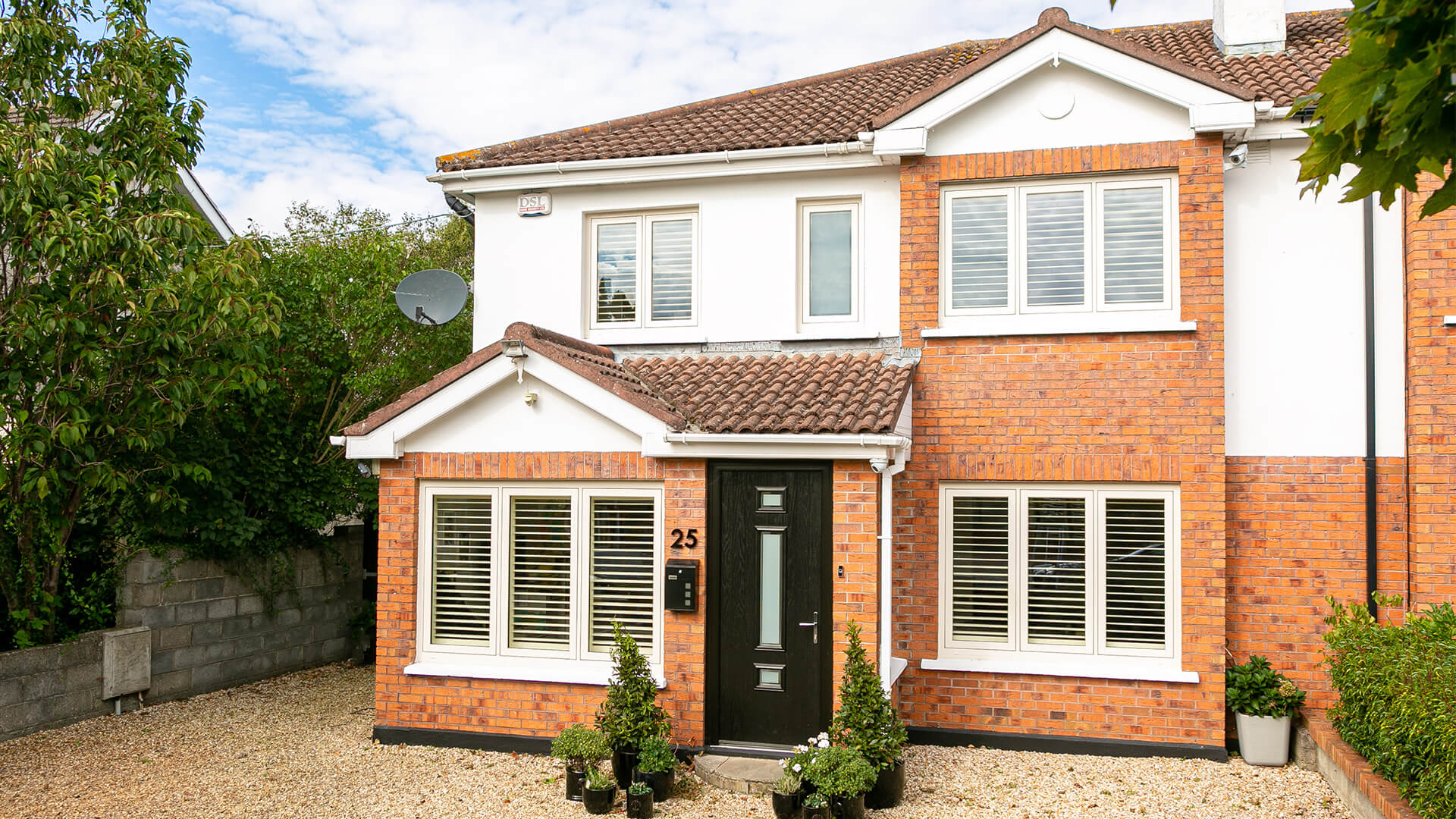
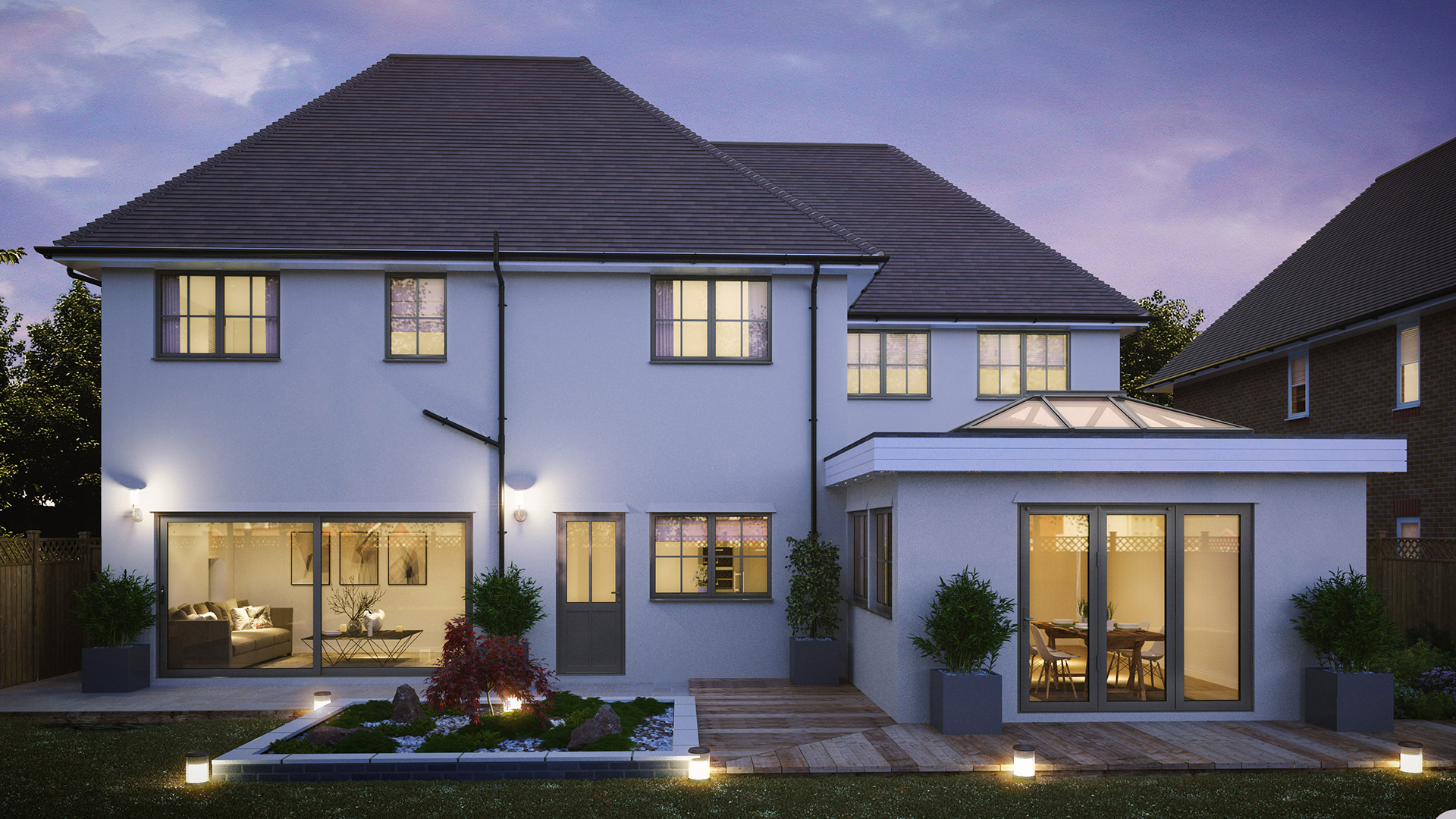
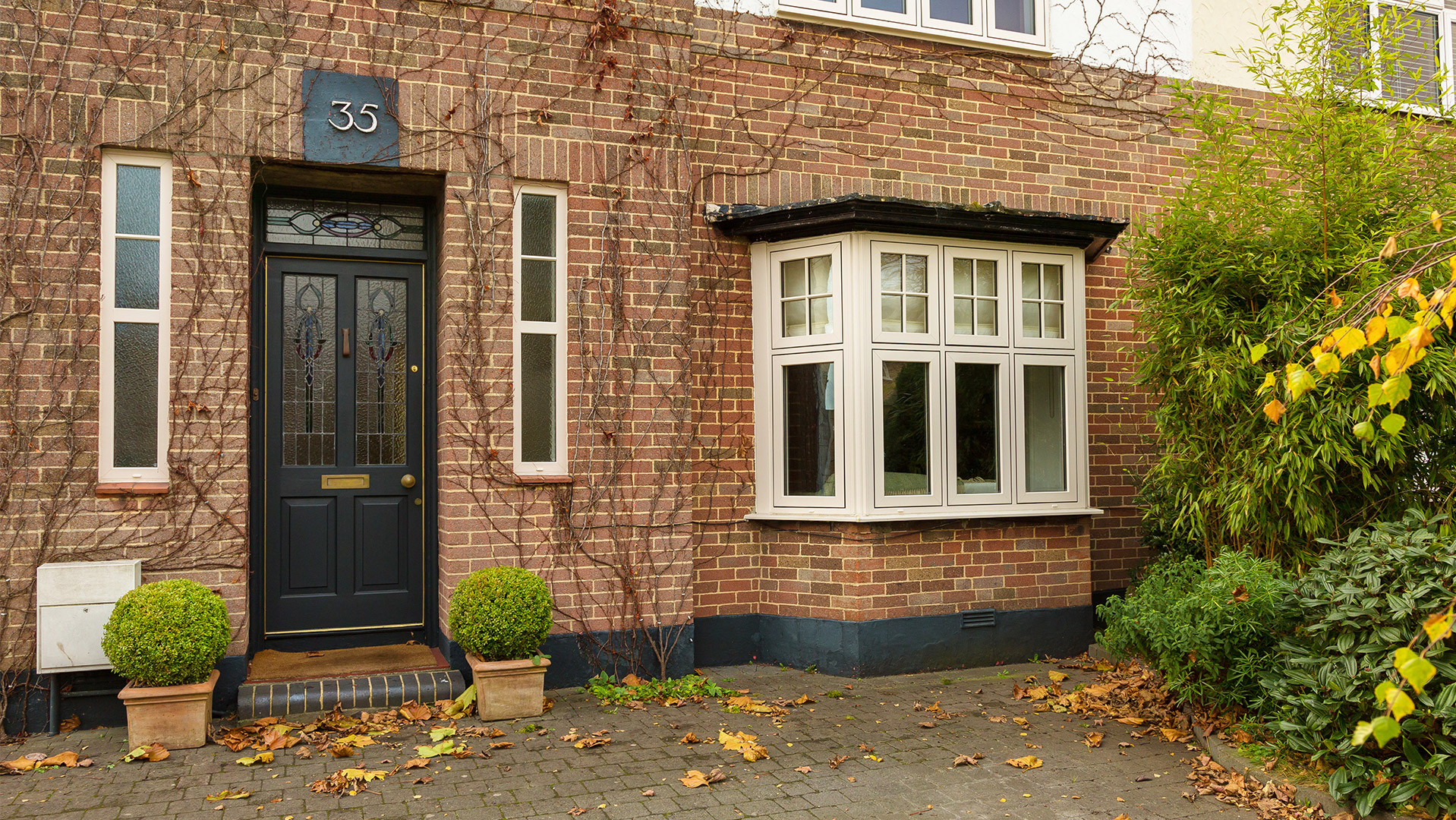
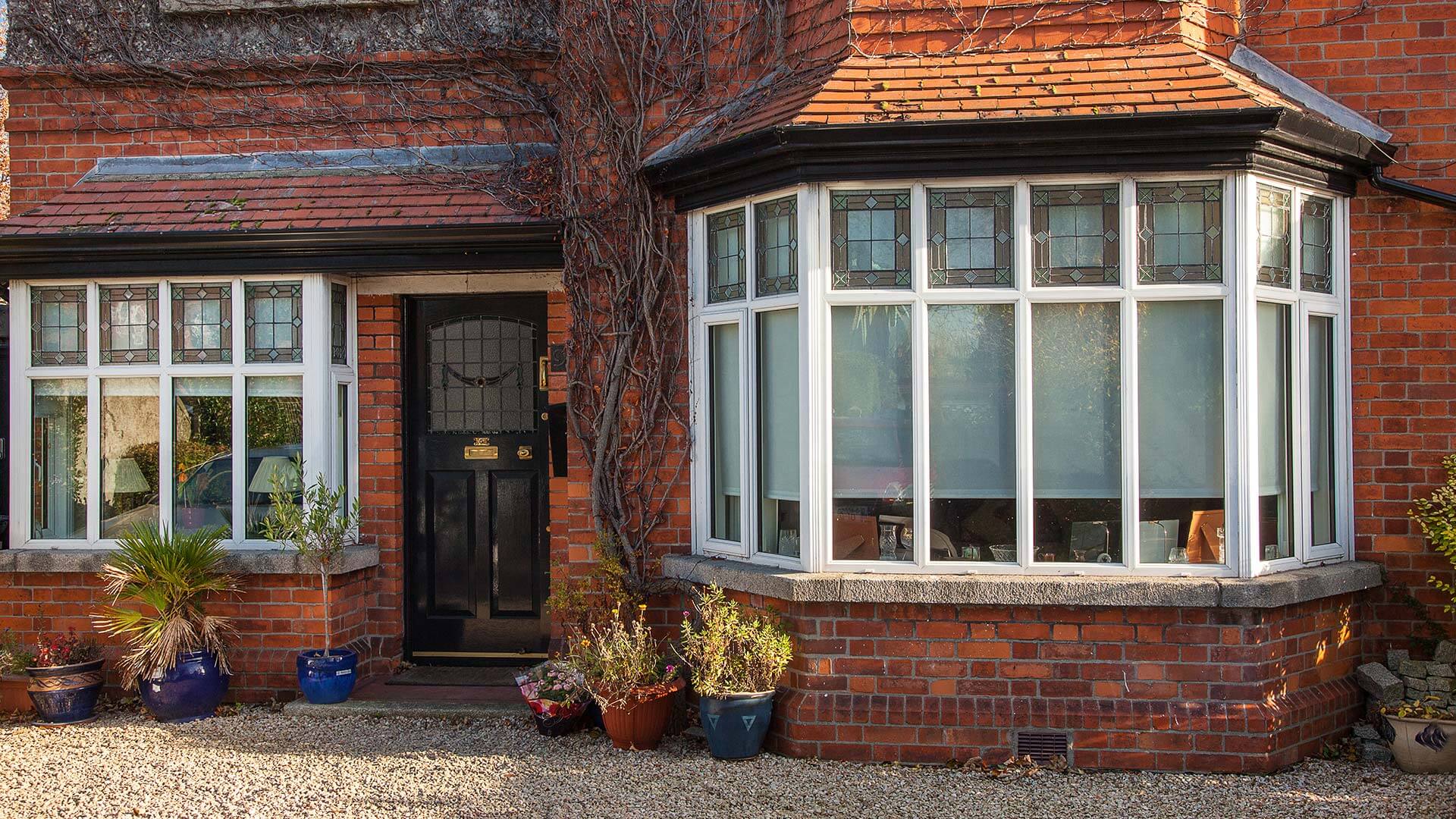
A front door is the first thing visitors see, and Garda figures show it’s the most common entry point in burglaries. Back and patio doors decide how well your home connects to the garden, and every external door affects how warm the house stays. This door buying guide covers all of it, from spotting when a door needs replacing to what makes one secure.
Introduction

A new door affects how secure, warm and dry your home is, and the front door is one of the first things people notice about a house. Start with the basics: what a good door should do, and the signs that your current one is near the end of its working life.
What should a good door do?
A good door should:
- Lock at several points along its length, into a strong, reinforced frame.
- Have glass that is toughened or laminated and can’t be removed from outside.
- Reach a U-value of 1.4 W/m²K or lower (0.86 for OMNIA Flush). The U-value measures how much heat escapes, and lower is better; it’s explained in the energy efficiency section.
- Seal against draughts and driving rain, including at the threshold.
- Open and close smoothly without dropping or sticking over time.
- Be made to measure for your opening.
- Suit the style of your house.
- Come with a guarantee and an aftercare service if anything needs adjusting.
The door leaf (the part that opens), frame, glass, locks and seals have to work together. A heavy, secure door on weak hinges will drop; good seals won’t help if the threshold lets water in.
Does your door need replacing?
A new door is worth considering if you notice any of these:
- Condensation or fogging inside a glazed panel, which means the seal on the unit has failed.
- Draughts around the edges or under the door when it’s closed and locked.
- A door that sticks, drops or has to be lifted or pushed to lock.
- Locks, handles or hinges that are stiff, loose or broken.
- Timber that is soft, rotting, split or badly warped.
- uPVC panels or frames that are cracked, chalky or badly discoloured.
- Water getting in at the threshold during heavy rain.
Some problems have simpler fixes. Worn seals can be replaced, a door that has dropped can often be adjusted, and a failed glazed unit can sometimes be swapped on its own. When several problems show up together, or the frame itself is failing, replacement usually makes more sense. Read signs it’s time to replace your front door for more.
If a door fitted only a few years ago is already showing these signs, contact the company that installed it before paying for repairs. Fairco customers can arrange a visit through the aftercare team.
Door types, materials and construction
Choosing a door comes down to three things: the type of door, which depends on where it goes and how it opens; the material; and the construction, which affects how well it seals and stands up to daily use.
Types of external door
External doors fall into two broad groups. Entrance doors are front and back doors, usually a single leaf hung on hinges. Patio doors lead onto the garden and are usually wider and mostly glass. Within those groups, doors are named by how they open.
Entrance doors

A single door leaf hung in a frame, often with glazed sidelights or a toplight above. A front door has to look right, keep the weather out and resist forced entry. See Fairco’s entrance doors and entrance doors: first impressions.
French doors

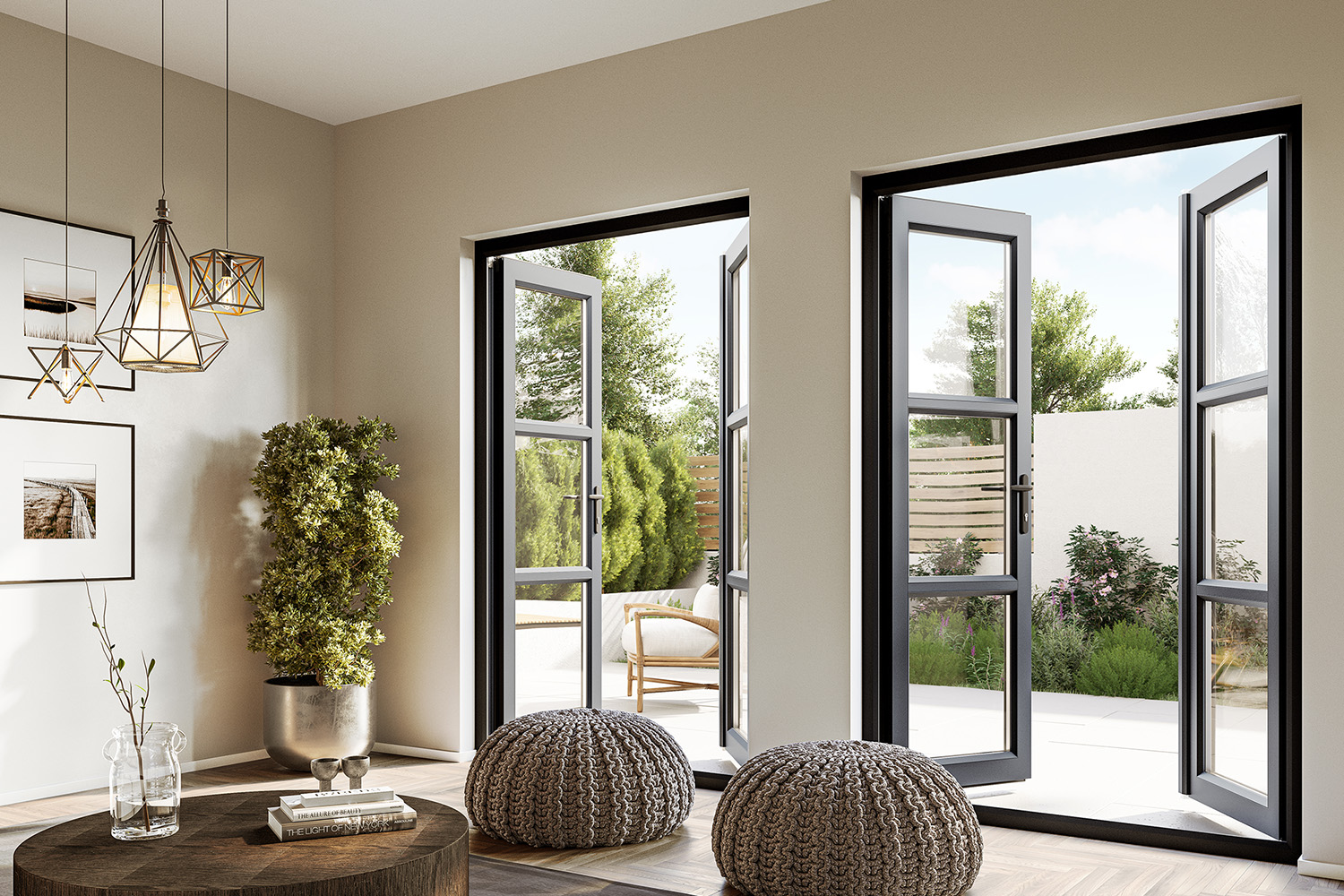
A pair of side-hung doors that open from the centre, either inwards or outwards. They’re a classic choice for a living room or kitchen opening onto a patio. Read French doors: classic design for modern living and see Fairco’s French doors.
Sliding doors

Large glass panels slide past each other on a track, so nothing swings into the room or the garden. They suit wide openings and rooms where furniture sits close to the glass. Fairco’s aluminium sliding doors come in two, three, four or six-panel layouts, with double or triple glazing and panels up to 2.7m high. Read sliding doors and open-plan living and see Fairco’s sliding doors.
Bi-folding doors

Panels fold against each other and stack to one or both sides, opening almost the full width of the wall. They work well in extensions and kitchens where you want the room and garden to feel like one space in summer. Fairco’s aluminium bi-folds can fold inwards or outwards, open from one end or the middle, and span up to 8.5m with as many as seven panels. A flush-fitting trickle vent can be built into the frame for background ventilation. See Fairco’s bi-folding doors.
Read how to choose the right patio door, and for extensions, getting the glazing right for garden rooms and extensions.
Which door material is right for your home?
Fairco’s doors come in four materials: composite, aluminium, uPVC and timber. Each has its own strengths, and the right one depends on the type of door, the style of the house and how much upkeep you want.
How door materials have changed
Doors were made from timber for centuries, first as boarded doors of joined planks and later as the panelled doors familiar from Georgian and Victorian houses. Aluminium and glass doors arrived after the Second World War, and uPVC doors became common from the 1980s. Composite doors, with a tough outer skin over an insulating core, are the most recent addition and now a popular choice for front doors.
Composite doors

A composite door has a dense insulating core covered by a glass-reinforced plastic (GRP) skin, which can be moulded with a realistic timber-grain texture. The result is a thick, rigid door that resists weather and needs very little upkeep. Fairco’s composite doors have aluminium subframes and a rigid core for extra strength.
Fairco’s Apeer70 composite door is 70mm thick, with a double-rebated design that adds a second line of seals against draughts and rain. Independent hot box testing by IFT Rosenheim gave the Apeer70 range a U-value of 0.85 W/m²K, well below the 1.4 benchmark. It comes with security-laminated glass and a choice of premium colours.
Aluminium doors

Aluminium is strong enough to carry large glass panels in slim frames, which is why it’s a common choice for sliding and bi-folding doors, as well as contemporary front doors. Modern aluminium doors include a thermal break, an insulating section that stops heat passing through the metal. The powder-coated finish won’t rot or rust. Fairco’s aluminium doors reach U-values between 1.4 W/m²K with double glazing and 1.1 W/m²K with triple glazing. They come in four stock colours (white, black, anthracite grey, and anthracite grey outside with white inside), and hundreds of other colours and textured finishes can be ordered. Aluminium can also be recycled again and again, and recycling it takes around 5% of the energy needed to make new metal. See Fairco’s aluminium range.
uPVC doors

uPVC doors have hollow, multi-chambered frames with steel reinforcement for strength, and the hinges and locks fix into that reinforcement. They’re low maintenance and available in white, colours and woodgrain finishes. uPVC is used for front doors, back doors, French doors and patio doors.
OMNIA Flush, a VEKA system, is a double-flush, double-rebated uPVC door available as a single entrance door or as French doors. It reaches U-values as low as 0.82 W/m²K with triple glazing and 1.2 W/m²K with double glazing, and the system is PAS 24 approved. In weather testing, the single door achieved water tightness Class 7A and wind resistance of 1200 pascals. Read why uPVC is still the most popular choice for Irish homes.
Timber doors

Timber is the traditional material for front doors and the original material in most period homes. It can be stained to show the grain or painted any colour, and repainted later if you want a change.
Fairco’s timber entrance doors are made from Accoya, a radiata pine that has been acetylated. This process changes the structure of the wood so it takes in far less water, which means it swells and shrinks much less than untreated timber. According to its maker, Accsys, Accoya holds the highest durability classification for wood, Class 1. The Building Research Establishment (BRE) concluded that Accoya has a service life expectancy of 60 years in exterior uses such as doors, provided best design practice is followed, and Accsys guarantees the wood for 50 years above ground. Testing by IFT Rosenheim found Accoya conducts heat 30% less than typical hardwood.
Like any timber door, an Accoya door needs recoating from time to time. Because the wood stays stable, coatings last longer: coatings manufacturer Remmers sets maintenance intervals of up to 10 years for translucent and up to 12 years for opaque factory finishes on Accoya joinery. Read how to maintain your Accoya timber front door.
Which material suits which house?

Period homes suit timber, or a composite door with a timber-grain finish and traditional panel design. Georgian and Victorian front doors are often part of a set with a fanlight or sidelights, so plan the whole entrance together.
Suburban homes from the 1960s on often have uPVC or older timber doors. A composite front door is one option, and uPVC or aluminium can be used at the back of the house.
Modern homes and extensions suit aluminium or flush doors with large glass areas, especially for sliding and bi-folding openings.
For more on front doors specifically, read what are the best front doors for my home?
How a door is built
Whatever the material, every door is made up of the same parts: the leaf, the frame, the rebates and seals where the two meet, and the threshold at the bottom. How well these fit together decides how well the door seals and how smoothly it works over the years.
The door leaf
The leaf is the part that opens. Traditional joinery names its parts: the vertical sides are the hinge stile and lock stile, the horizontal pieces are the top, middle and bottom rails, and any vertical divider between panels is a muntin. Modern doors often keep these proportions even when they’re made from composite or uPVC. A leaf can be solid, part-glazed or fully glazed.
The frame
The frame is made from lengths of profile cut to size and joined at the corners. It has to carry the full weight of the door without bowing, so uPVC frames are reinforced with steel and composite doors are often built on aluminium subframes. Some frames use mechanical joints to copy the look of timber joinery.
Rebates
A rebate is the step where the door leaf overlaps the frame. It creates a barrier against wind and rain and gives the seals something to press against. A double-rebated door has two overlapping steps and two lines of seals. Fairco’s Apeer70 composite doors and OMNIA Flush doors are both double-rebated.
Seals
Gaskets run around the edge of the leaf and frame to stop draughts and water. Older rubber seals can flatten over time, while newer materials are designed to spring back every time the door closes.
Thresholds
The threshold is the base of the frame that the door closes onto. A standard threshold has an upstand that the door seals against. Low thresholds reduce the step for easier access, and a weather bar or drip on the bottom of the door directs rain away from the opening.
Glass in doors

Door glass works the same way as window glass. Two or three panes are sealed together with a spacer bar and a gas-filled cavity between them, which slows heat loss. Because doors are opened, closed and knocked against every day, the glass in and beside them also has to meet safety rules. Read double glazing vs triple glazing and what is a warm-edge spacer bar.
Types of door glass
Most door glass starts as clear float glass, which is then toughened or laminated for safety and security. Decorative and obscure glass can be added for style and privacy.
Clear float glass
Float glass is the standard clear glass used in windows and doors. It’s made by floating molten glass on a bath of molten tin, which gives a flat, even sheet with no distortion. On its own it breaks into sharp pieces, which is why glass in and beside doors must be toughened or laminated. The window buying guide explains float glass and sealed units in more detail.
Toughened glass
Heat treatment makes toughened glass several times stronger than ordinary glass. If it does break, it shatters into small, blunt pieces. Building regulations require safety glass in and beside doors.
Laminated glass
Laminated glass has a plastic interlayer that holds the pane together if it’s struck, which makes it much harder to break through. Fairco’s Apeer70 composite doors come with security-laminated glass.
Decorative glass
Decorative panels can combine coloured, bevelled and leaded glass. Etched and sandblasted designs can include a house number or name. Sealing a decorative design inside a double or triple-glazed unit protects it and keeps the door’s performance.
Obscure glass
Textured obscure glass lets light through while blurring the view into your hall. Patterns range from light textures to heavy obscuration, which suits front doors that face the street.
Sidelights, toplights and fanlights
Glazed panels beside or above a front door bring daylight into the hall. A fanlight is the traditional semi-circular or rectangular window above a Georgian door, and keeping or recreating it when the door is replaced helps a period house hold on to its character.
Colours, finishes and features

Once the type and material are settled, the finish makes the door your own. This section covers colours, hardware, and practical features for access, pets and exposed locations.
Colours and finishes
Front doors come in a far wider range of colours than windows usually do, from heritage greens, blues and greys to bold statement shades and timber-grain finishes. Many doors can also be one colour outside and another inside. The finishes available depend on the door material.
Composite door colours
Fairco’s Apeer70 composite doors come in 13 premium colours, with UV-stable coatings designed to resist fading. The GRP skin can also carry a realistic timber-grain texture.
OMNIA Flush colours and Fine Texture Foil
OMNIA Flush doors share the colour range of OMNIA Flush windows, so doors and windows can match exactly. There are twelve colours and finishes: White, Cream, Agate Grey, Claystone, Pebble Grey, Chartwell Green, Sage Green, Anthracite Grey, Beck Brown, Ulti-Matt Black, Irish Oak and Ginger Oak. For an aluminium look, Fine Texture Foil adds eight matt, powder-coat-style finishes: Traffic White, Silver Grey, Quartz Grey, Slate Grey, Basalt Grey, Anthracite Grey, Umber and Black. See OMNIA Flush finishes.
Aluminium door colours
Fairco’s aluminium doors come in four stock colours: white, black, anthracite grey, and anthracite grey outside with white inside. Hundreds more are available to order as RAL match, along with textured finishes.
Timber finishes
Accoya timber doors can be stained to show the grain or painted any colour, and repainted later if you want a change.
Choosing a colour
Look at your brick, render, window frames and roof together when choosing. Colour ranges change, so the best way to choose is with samples in a showroom, in daylight.
Hardware
Hardware comes in finishes such as chrome, black, gold and bronze, and knockers, letterplates, numerals and handles can all be matched to each other and to the door.
The door builder
Fairco’s door builder lets you try different models, colours, glass and handles online before you visit a showroom.
Access, pets and coastal homes
A low threshold removes the step at the door, which helps anyone using a wheelchair, walking aid or buggy, and makes the transition to a patio smoother. Lever handles are easier to use than knobs for people with limited grip. Read easy-to-use windows and doors for every stage of life.
If you have dogs or cats, think about scratch-resistant finishes, toughened or laminated glass at low level, and whether you want a pet door fitted. See pet friendly windows and doors.
Homes near the sea need hardware and finishes that stand up to salt air. See windows and doors for coastal homes in Ireland.
Security and energy efficiency

A door has to keep intruders out, keep heat in, and keep weather and noise outside. This section covers the locks and standards to look for, the energy figures on a quote, and the SEAI grant for windows and doors.
What makes a door secure?
According to Garda figures, one-third of burglaries happen through front doors, most often by force, and back doors account for 26%. One in five burglaries involves an unsecured door or window. The Garda Lock Up Light Up campaign has more prevention advice.
Multi-point locking
Lifting the handle and turning the key engages several bolts and hooks along the lock side of the door at once. Hooks that grip the frame in opposite directions make the door much harder to lever or lift. Fairco entrance doors use multi-point locking with reinforced frames.
Cylinders
Most modern doors lock with a euro cylinder, the part the key turns. Poor-quality cylinders can be snapped, so look for anti-snap, anti-bump and anti-drill cylinders, fitted so they don’t stick out beyond the handle.
Night latches
A night latch locks automatically when the door closes. It’s convenient, but it isn’t a substitute for locking the door with the key, which engages the full multi-point system.
Hinge-side protection
Hinge bolts or dog bolts on the hinge side hold the door in the frame when it’s closed, so it can’t be forced out even if the hinges are attacked.
Glazing beads and panels
Glass and panels should be held in with internal beads that can only be reached from inside, so they can’t be removed from outside.
Sliding door security
Older sliding doors could sometimes be lifted off their track. Modern sliding doors use anti-lift devices and multi-point locks so the panels can’t be lifted or levered out.
Letterboxes and keys
Gardaí warn about “fishing”, where burglars hook car keys through a letterbox, and say the Dublin region is most at risk. Keep keys away from the front door, and consider a letterbox guard or a door with no letterbox and a separate post box.
Door chains and viewers
A door chain or limiter lets you open the door a little to check who’s there, and a viewer or spyhole lets you check without opening it at all.
Security standards
Gardaí recommend doors that meet I.S. EN 1627:2011 or PAS 24, because both involve specific burglary-resistance testing. PAS 24 security comes as standard on every Fairco door. Read what is PAS 24, security features every front door should have and how windows and doors are tested.
For wider advice, see Fairco’s home security page and quick tips for home security.
Energy efficiency, U-values and SEAI grants

A door’s energy performance comes down to how much heat escapes through it and around it. The sections below cover heat loss, U-values and the SEAI grant for windows and doors.
How much heat do doors lose?
SEAI estimates that a home can lose up to 10% of its heat through poorly performing windows and doors. With doors, heat can also escape through gaps: worn seals, a door that has dropped, a draughty letterbox or a threshold that no longer seals.
U-values for doors
A U-value measures how quickly heat passes through the door, in W/m²K. The lower the number, the better. Ireland’s building regulations (Technical Guidance Document L) set an average of 1.4 W/m²K for windows, doors and rooflights in new homes, and SEAI uses the same figure for its grant. Ask for the U-value of the whole door set, including any glass.
For comparison, Fairco’s Apeer70 composite door has tested at 0.85 W/m²K, OMNIA Flush doors reach as low as 0.82 W/m²K with triple glazing, and Fairco’s aluminium doors range from 1.4 W/m²K double glazed to 1.1 W/m²K triple glazed. The exact figure for your door depends on its size and how much glass it has, so your surveyor will confirm it for your order.
A door’s performance depends on its core, the glass, the number of seals and rebates, and the quality of fitting. A well-rated door fitted with gaps around the frame will still let heat escape. Read understanding thermal bridging and understanding your BER.
The SEAI windows and doors grant
According to SEAI, the grant is worth up to €1,600 for doors and up to €4,000 for windows. You can apply for either or both. The main conditions are that the home was built and occupied before 2011, meets SEAI’s insulation requirements, and that the new doors reach a U-value of 1.4 W/m²K or lower, fitted by an SEAI-registered contractor. The window buying guide lists the conditions in full.
Grant details were checked in September 2026. Check SEAI’s website for the latest terms before you apply.
Fairco is an SEAI-registered contractor. The windows and doors grant page explains how the grant works with a Fairco project, and our post on the new grant covers the background. For the bigger picture on running costs, read why energy-efficient windows and doors make financial sense.
Can a new door reduce noise?
Yes. A thick, well-sealed door with a solid core helps block sound, because sound passes through gaps in the same way air does. If the door has glass, acoustic laminated glass helps further. Mention traffic or other noise at your survey. Read reducing noise with the right glazing.
Buying and installing your doors

Once you know what you want, check whether you need planning permission and choose your company carefully before you sign. After that come the survey, the installation and looking after the door afterwards.
Planning permission and conservation areas
Replacing a door with one of similar appearance usually counts as exempted development. Protected structures and architectural conservation areas are treated differently, and changing the style of a front door or its fanlight can need permission. Rules vary by council, so check with your local authority before ordering. The same principles apply as for windows, covered in our guide to planning permission for replacement windows.
Some estates and apartment blocks also have management company rules on front door colour and style, so check those as well.
How to choose a door company
These questions are worth asking any company before you sign:
- Do you make the doors yourselves, or buy them in?
- Who measures the opening, a surveyor or the fitter?
- Are the doors certified to PAS 24?
- What is the U-value of the whole door set?
- If I’m applying for the SEAI grant, are you a registered contractor?
- What does the guarantee cover, and for how long?
- Who do I call if the door needs adjusting after installation?
- Can I see the doors, colours and hardware in a showroom?
Ask neighbours who’ve had work done, and read recent reviews. Fairco entrance doors come with a 10-year manufacturer’s guarantee, every opening is measured by a surveyor, and Fairco is registered with SEAI for grant-funded work.
Survey, installation and aftercare
A surveyor measures the opening before anything is made, and most doors are replaced in a single visit. After fitting, a little regular care keeps the door working well.
The survey
A surveyor visits your home, measures the opening and checks the walls, step and threshold. This is also when you talk through style, glass, colour and hardware, plus any access or security concerns.
Installation day
A door is usually removed and replaced in a single visit, so your home is secure again by the end of the day. Read how to prepare your home for installation and a homeowner’s guide to Fairco installation day.
Looking after your doors
Clean the door and frame with warm soapy water a few times a year and keep the threshold drainage clear. Once a year, put a drop of light oil on the hinges and locking points, and let the lock mechanism work freely. Sliding and bi-folding tracks should be kept free of grit, and timber doors should be recoated at the intervals set for their finish. Seasonal checks are covered in preparing your windows and doors for autumn and winter. If something needs adjusting, Fairco’s aftercare team can help, and the full terms are in the Fairco care guarantee.
Book a free consultation
Fairco is trusted by over 40,000 homeowners, and every project follows the same process: a survey of your home, doors made to measure, and installation by Fairco’s own teams. The Fairco Difference walks through each step.
The easiest way to choose a door is to see it, open it and hear it close. Compare styles, colours and hardware side by side in the Santry or Deansgrange showroom. Or book a free consultation, and a Fairco surveyor will come to your home, measure up and talk you through the options that suit it.
Replacing windows as well? The window buying guide covers them.