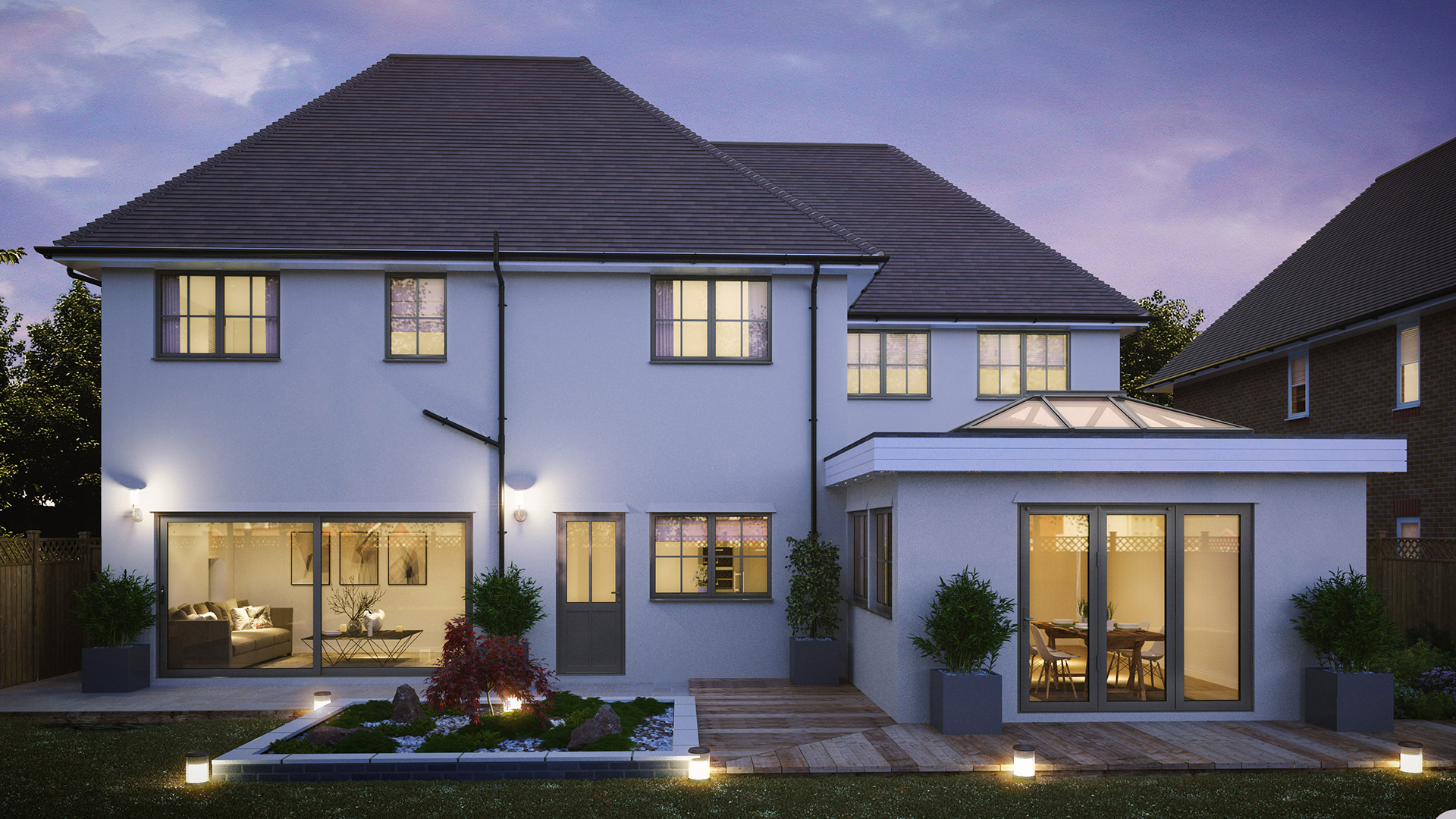
Garden rooms, single-storey rear extensions, and open-plan kitchen-diners with large glazed openings have become one of the most popular home improvement projects in Ireland. The appeal is obvious: more space, more light, and a stronger connection between the home and the garden. But because these spaces typically have a high ratio of glass to wall area, the glazing specification has a bigger impact on comfort than in almost any other room. Get it right, and you have a bright, usable space all year round. Get it wrong, and you end up with a room that overheats in summer and loses heat rapidly in winter.
Balancing light and heat

The whole point of a garden room or glazed extension is to bring in natural light. Large windows, full-height glazing, and wide door openings all contribute to that goal. But glass lets heat in as well as light, and in a south or west-facing extension, solar gain during summer months can push internal temperatures well beyond comfortable levels, even on days that feel moderate outside.
Low-emissivity coatings on the glass help manage this. They allow visible light to pass through while reflecting a proportion of the sun’s infrared energy back out, reducing solar heat gain without darkening the room. The balance between light transmission and solar control is something that should be discussed at the specification stage, because it varies depending on orientation. A south-facing garden room needs more solar control than a north-facing one, and the glazing can be tailored accordingly.
Thermal performance in winter
The opposite challenge applies in colder months. A room with large glazed areas loses heat faster than a conventionally walled room if the glazing is not performing well. This is where U-values matter most. Triple glazing is particularly well-suited to garden rooms and extensions because it delivers lower U-values than double glazing, keeping the room warmer for longer without heavy reliance on the heating system.
Frame choice also plays a role. Aluminium frames with thermally broken profiles offer slim sightlines that maximise the glass area while still delivering strong insulation. OMNIA Flush provides a clean, contemporary uPVC alternative with U-values as low as 0.75 W/m²K in triple-glazed configurations. Both are well-suited to the large openings that define these spaces.
Choosing the right door type

The door connecting your extension or garden room to the garden is often the largest single-glazed element in the space, and it shapes how you use the room day to day.
Sliding doors are a popular choice where wall space is limited. They glide along a track without swinging into the room or the patio, making them practical for everyday use and effective at maximising the opening width. For wider openings where the goal is to fully open up the back of the house, bi-fold doors fold back in concertina panels to create an almost uninterrupted transition between inside and outside. French doors remain a strong choice for more traditional properties or smaller openings, offering a wide, clean access point with a classic appearance.
Whichever type you choose, low-threshold options improve accessibility and create a seamless floor-to-floor transition between the interior and the patio or decking outside.
Ventilation and overheating control
Good ventilation is essential in heavily glazed spaces. Tilt-and-turn windows allow controlled airflow from the top of the sash without fully opening the window, which is useful for maintaining background ventilation during warm weather. Positioning opening windows on opposite walls or adjacent elevations supports cross-ventilation, which is one of the most effective passive methods of cooling a room without mechanical systems.
For garden rooms used as home offices, studios, or living spaces, the ability to manage ventilation and temperature throughout the day is a practical priority, not just a comfort preference.
Planning it early
The best results come when the glazing specification is considered as part of the design process, not selected after the structure is built. Orientation, opening sizes, frame material, glazing type, and ventilation strategy all interact, and decisions made early in the project make it much easier to achieve a space that performs well in every season.
Fairco’s team works with homeowners, architects, and builders on extension and garden room projects across Dublin and beyond. Book a free consultation to discuss your project and find the right glazing specification for your space.