Accoya door maintenance comes down to three things: cleaning the door a few times a year, inspecting the finish once a year, and recoating when the paint or stain needs it. Because Accoya is far more stable than ordinary timber, that recoating is needed much less often, but like any painted or stained wood, it does need doing eventually. This guide covers the full routine, using the care advice published by Accsys, the company that makes Accoya.
Why Accoya needs less maintenance
Accoya is radiata pine that has been acetylated, a process that changes the structure of the wood so it takes in far less water. Ordinary timber swells when it’s wet and shrinks as it dries, and that constant movement is what cracks paint and lets moisture in. Accoya moves much less, so the coating on it stays intact for longer. The difference shows in the maintenance intervals. Coatings manufacturer Remmers sets maintenance intervals of up to 10 years for translucent and up to 12 years for opaque factory finishes on Accoya joinery. In a long-term test at the Accsys test field in Arnhem, an Accoya window frame coated with a Remmers translucent finish was left outdoors, unsheltered, for 15 years with no maintenance at all, and showed no visible breakdown of the coating. Those figures are for well-made, factory-finished joinery in good condition. Accsys is clear that, like all coated materials, Accoya will need maintenance at some stage, and that regular care is what keeps it looking its best.
Your yearly care routine
Accsys compares caring for wooden joinery to servicing a boiler or a car: a little regular attention prevents bigger problems later. It recommends an annual inspection, cleaning and maintenance. For most Accoya doors, that means the following.
Clean the door a few times a year
Wipe the door down with a soft cloth and mild soapy water, then rinse with clean water and dry it off. Pay attention to the areas around the handle, letterbox and lower panels, where dirt builds up most. Avoid abrasive pads, strong solvents and harsh chemical cleaners, which can damage the finish.
Inspect the finish once a year
Look over the whole door for chips, scratches, cracks in the paint or any spots where bare wood is showing. The most exposed areas are the bottom rail, the edges of the door, and the paint around the handle, lock and letterbox. Late spring or early summer is a good time, so any repairs can be done in dry weather.
Repair damage straight away
Accsys advises dealing with any damage to the coating immediately, before moisture can get underneath it. For a small chip, clean and dry the area, sand it lightly with fine paper (120 to 240 grit), and touch it up with primer and topcoat from the same coating system as the rest of the door. Deeper damage can be filled with a two-part exterior wood filler first. If you’re not sure which products your door was finished with, Fairco can advise.
Look after the hinges, locks and door furniture
All wood contains natural organic acids. Accoya has a similar level to oak, and in damp conditions this can speed up corrosion of some metals, so the hardware on an Accoya door needs a little attention:
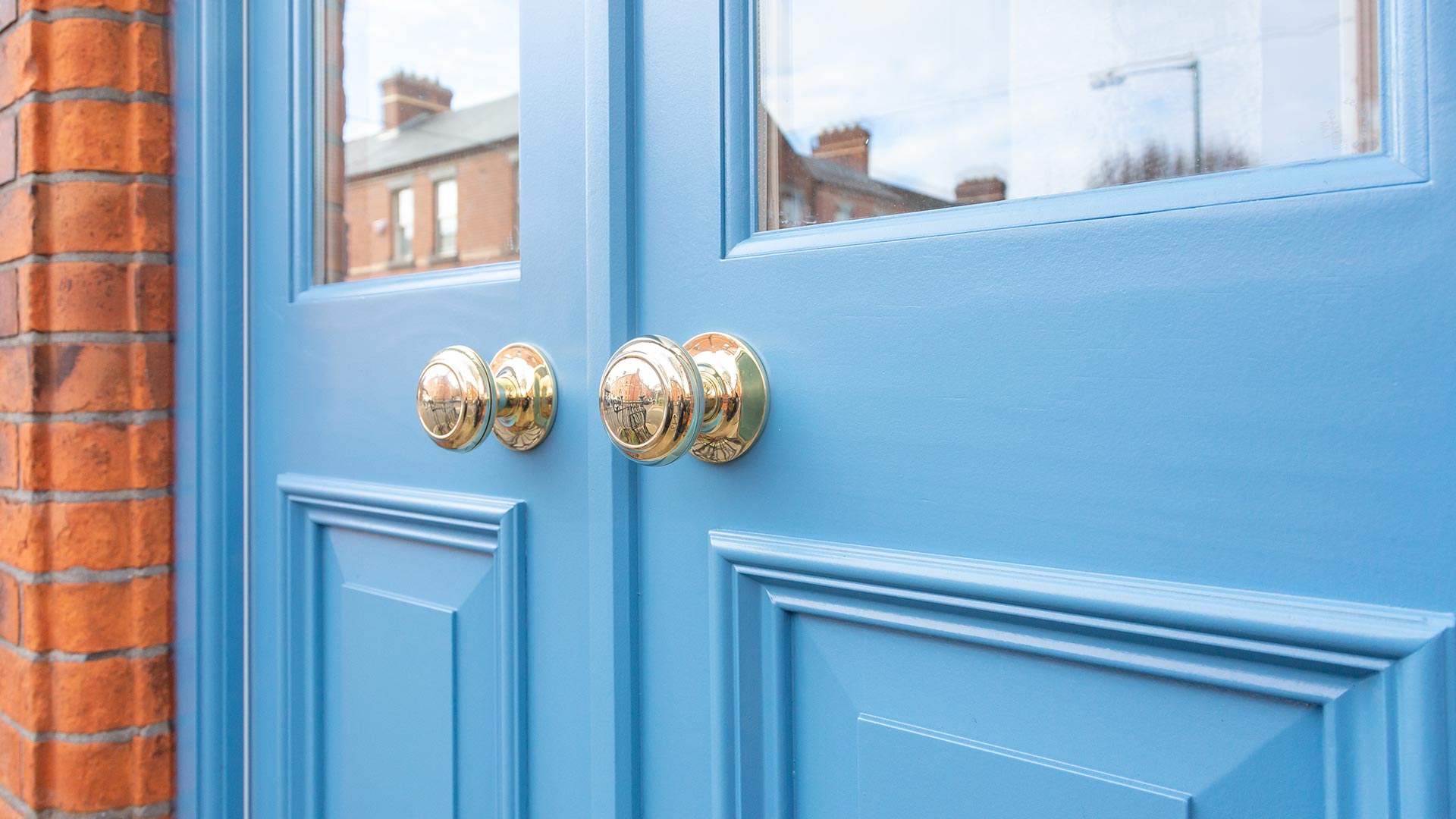
- Once a year, spray the lock mechanism and hinges with a PTFE or lithium grease spray. This keeps them working smoothly and adds a water-repellent layer.
- Keep the paint intact around the handle, lock and letterbox cut-outs, because the coating acts as a barrier between the metal and the wood.
- If you replace a handle, letter plate, knocker or hinge, choose stainless steel or brass, which Accsys recommends for exterior use. In coastal areas, marine-grade stainless steel is the better choice.
Check the seals and threshold
Look at the weather seals around the frame for any that are worn, flattened or peeling, and make sure the drainage at the threshold is clear of leaves and grit. Damaged seals let in draughts and water, and they can be replaced without changing the door. Seasonal checks for all your windows and doors are covered in preparing your windows and doors for autumn and winter.
When and how to recoat
Your annual inspection will tell you when the door needs recoating. Signs include a finish that has dulled or faded, or areas where the coating has worn thin. Doors that face south, or stand in exposed or coastal spots, will usually need attention sooner than sheltered ones.
Use the same coating system
Each coatings manufacturer sets its own specification for Accoya, and Accsys advises following that manufacturer’s guidance above anything else. The simplest approach is to recoat with the same system your door was finished in. Many homeowners hand this job to a decorator, who can check the details below.
Get the conditions right
Accsys recommends doing maintenance in the summer months. The wood must be clean, dry and free of dust and grease, and its moisture content should be below 8%, which a decorator can check with a moisture meter. Avoid painting in cold, damp weather, which slows drying, and in direct sunlight, which can make the paint dry too fast and leave an uneven finish.
If you sand back to bare wood
If any area is sanded right back to bare wood, the coating needs to be rebuilt from scratch. For an opaque paint finish, Accsys specifies at least four coats: two primers and two topcoats. Any exposed end grain should be sealed with an end grain sealer that’s compatible with the paint system.
Frequently asked questions
How often does an Accoya door need repainting?
Much less often than ordinary timber. Remmers sets maintenance intervals of up to 12 years for opaque and up to 10 years for translucent factory finishes on Accoya. Exposure makes a difference, so inspect the door every year and recoat when the finish shows wear.
Can I paint my Accoya door a different colour?
Yes. Accoya can be painted any colour, as long as it’s properly prepared and the new paint is part of a system approved for Accoya. If you sand back to bare wood, build the coating back up with at least two primers and two topcoats.
Will an Accoya door warp or swell?
Accoya is manufactured to swell and shrink far less than untreated timber, because acetylation reduces how much water the wood takes in. That stability is what makes it well suited to front doors in the Irish climate.
How long will an Accoya door last?
The Building Research Establishment (BRE) concluded that Accoya has a service life expectancy of 60 years in exterior uses such as doors, provided best design practice is followed. Accsys also guarantees the wood itself for 50 years above ground.
What should I clean an Accoya door with?
Mild soapy water and a soft cloth are all it needs. Rinse with clean water afterwards and avoid abrasive or solvent-based cleaners.
Help from Fairco
If your Fairco door needs adjusting, or you’re not sure which products to use on it, the aftercare team can help. The full terms are in the Fairco care guarantee. Thinking about an Accoya front door? The door buying guide explains how Accoya compares with composite, aluminium and uPVC, and you can see Fairco’s entrance doors in person at the Santry or Deansgrange showroom. Book your free consultation
Accordion Item #1
Lorem Ipsum is simply dummied text of the printing and typesetting industry.
Accordion Item #2
Lorem Ipsum is simply dummied text of the printing and typesetting industry.
Accordion Item #3
Lorem Ipsum is simply dummied text of the printing and typesetting industry.